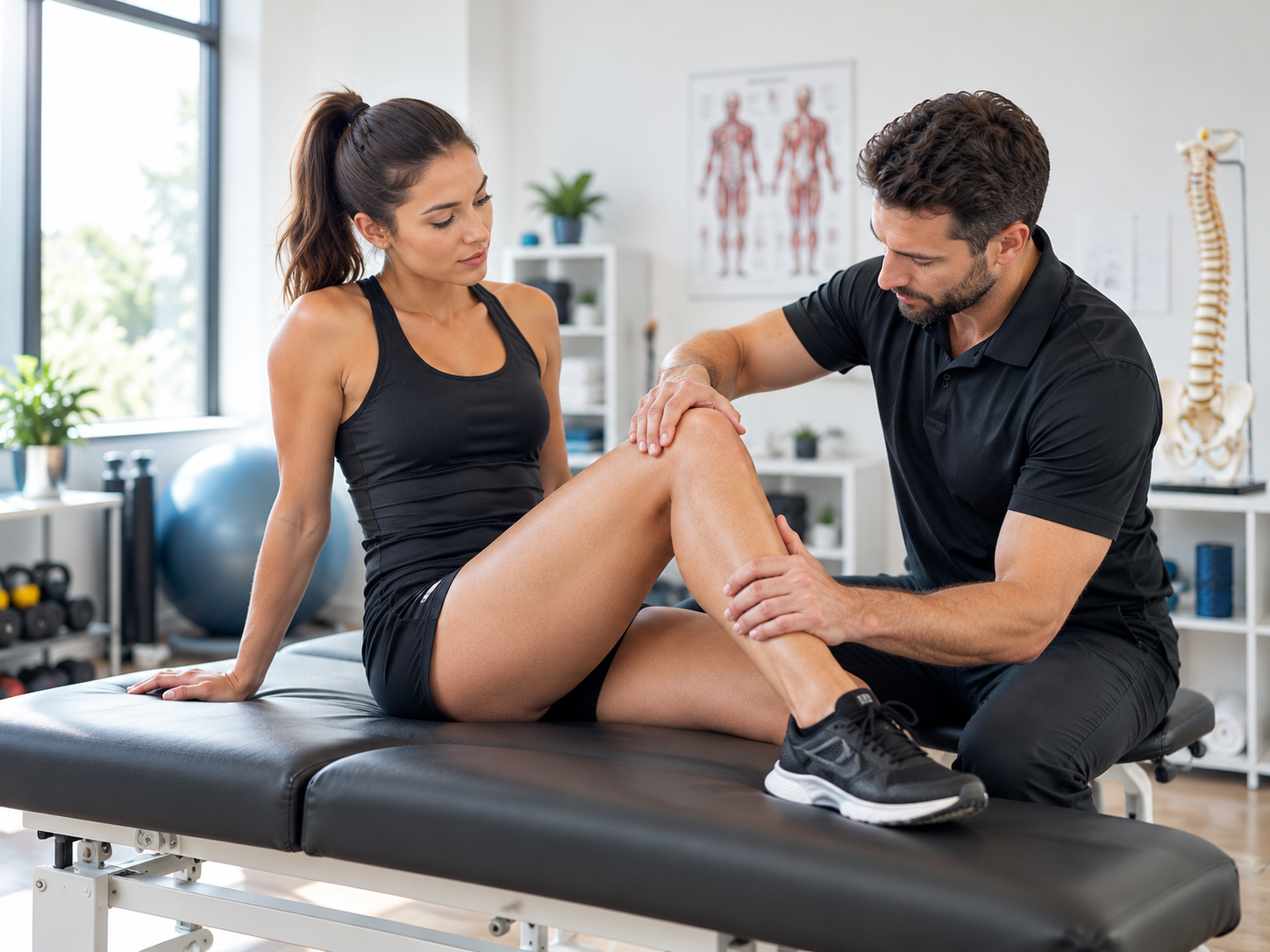
Optimise joint mobility, speed recovery, and boost athletic performance with expert care.
Whether you are a competitive athlete pushing for a personal best or a weekend runner training along the Waterfront Trail, physical performance hinges on precise biomechanics, rapid neural transmission, and efficient muscular recovery. In modern athletics, fine-tuning these elements requires more than just endurance training and power lifting; it requires optimal alignment and joint function.
Consulting an athletic performance chiropractor in Etobicoke allows athletes to address biomechanical inefficiencies, optimise joint mechanics, and support recovery through non-invasive, evidence-based conservative care. At Etobicoke Chiro, athletes receive tailored treatments designed to maintain kinetic chain efficiency, reduce injury susceptibility, and keep their training on track.
How Chiropractic Care Enhances Performance
Athletic movements, such as a baseball swing, a swimming stroke, or a track sprint, depend on a seamlessly functioning kinetic chain. If one link in this chain experiences joint restriction or altered proprioceptive feedback, downstream joints and muscles compensate, leading to decreased power output and increased risk of overuse injuries.
Chiropractic care supports athletic performance primarily by enhancing joint mobility, fine-tuning neuromuscular coordination, and expediting tissue repair.
1. Increased Range of Motion & Joint Flexibility
Restricted movement within the facet joints of the spine or peripheral joints (such as hips, shoulders, and ankles) impairs movement efficiency. Targeted spinal and joint adjustments help restore physiological motion, allowing athletes in rotational sports (golf, baseball), distance runners, and overhead throwers to move with greater fluidity and reduced mechanical friction.
For instance, restoring thoracic spine rotation allows a swimmer or golfer to achieve full rotational reach without over-leveraging the lower back or shoulder complex.
2. Improved Neuromuscular Control & Proprioception
Proprioception, the central nervous system’s ability to sense body position, balance, and spatial awareness, is regulated by mechanoreceptors embedded within joint capsules and deep spinal musculature. When joint dysfunction impairs mechanoreceptive input, reaction times slow down, and movement precision degrades.
Chiropractic adjustments and myofascial therapies help restore mechanoreceptive firing rates. This enhanced sensorimotor feedback fine-tunes motor unit recruitment, sharpens balance, and stabilises joint structures under dynamic training loads.
3. Accelerated Tissue Recovery and Reduced Soreness
High-volume training creates micro-trauma in muscle fibres, leading to localised inflammation, delayed onset muscle soreness (DOMS), and fascial restriction. By incorporating soft-tissue therapy, joint mobilisations, and targeted recovery protocols, an athletic performance chiropractor in Etobicoke helps promote localised blood flow, alleviate muscle tension, and speed up cellular recovery between intensive training blocks.
4. Proactive Injury Prevention and Risk Reduction
Rather than waiting for an acute sprain or tear to occur, proactive care identifies minor biomechanical asymmetries early. Correcting subtle leg-length discrepancies, pelvic tilts, or shoulder impingement risks before they manifest as painful symptoms ensures consistent, uninterrupted training cycles.
Core Chiropractic Interventions for Athletes
Sports chiropractors utilise a multimodal, evidence-based approach customised to the physical demands of an athlete’s specific sport.
| Technique / Modality | Primary Application | Target Mechanics & Expected Benefit |
| Spinal Manipulation (SMT) | Restricting spinal segments or hypomobile extremity joints | Restores physiological joint gliding, reduces segmental stiffness, and optimises neural communication. |
| Soft-Tissue Therapy (ART / Graston / Trigger Point) | Hypertonic muscle groups, fascial adhesions, and scar tissue | Breaks down fascial restrictions, restores tissue elasticity, and improves local perfusion. |
| Functional Rehabilitation | Weakened stabilisers, core instability, or post-injury movement faults | Rebuilds foundational strength, reinforces motor control, and improves kinetic alignment. |
| Ergonomic & Lifestyle Guidance | Training load management, posture, recovery, and movement habits | Guides safe return-to-play timelines, prevents overuse syndromes, and balances physical stress. |
Sport-Specific Biomechanical Applications
The movement demands of sports vary significantly. An athletic performance chiropractor in Etobicoke adapts clinical interventions to match the specific biomechanical demands of different disciplines:
Runners & Endurance Athletes
For runners, ground reaction forces can reach 2.5 to 3 times body weight with every footstrike. Minor imbalances in pelvic tilt or ankle dorsiflexion alter stride mechanics, leading to conditions like plantar fasciitis, Achilles tendinopathy, or iliotibial (IT) band syndrome.
By restoring hip extension and optimising lower extremity biomechanics, chiropractic care helps improve running economy and structural durability. Seeking assistance from a qualified sport injury chiropractor ensures that subtle gait compensations are resolved before progressing into chronic strain.
Overhead & Throwing Athletes
Baseball pitchers, tennis players, volleyball hitters, and swimmers rely on extreme shoulder range of motion combined with explosive thoracic extension and rotation.
If the thoracic spine lacks mobility, the glenohumeral joint and rotator cuff take on excessive stress. Chiropractic care focuses on thoracic manipulation, rib cage mobilisation, and scapular stabilisation to allow full kinetic power transfer from the legs to the upper extremity without overloading shoulder structures.
Rotational & Power Athletes
Golfers, hockey players, and martial artists generate force through rapid pelvic and trunk rotation. Hypomobility in the hip joints or lumbar spine forces the lower back to twist beyond its normal anatomical limits.
Restoring rotation in the hips and mid-back ensures torque is distributed across the kinetic chain, maximising power generation while mitigating the risk of lumbar disc stress. Athletes recovering from acute strains can leverage specialised Sport Injuries Chiropractic services to safely rebuild rotational strength and functional spinal stability.
Clinical Research and Evidence-Based Insights
While over 90% of professional sports teams across the NFL, NBA, MLB, and Olympic programs integrate sports chiropractors into their multidisciplinary medical teams, clinical literature continues to evaluate how manual therapies impact athletic metrics.
Direct vs. Indirect Performance Enhancements
Current research from sports medicine literature highlights that chiropractic care contributes to performance through both direct and indirect mechanisms:
- Indirect Performance Enhancement (Primary Outcome) – The primary documented benefits of chiropractic interventions stem from pain reduction, restored joint range of motion, and reduced muscle inhibition. By removing mechanical joint restrictions, athletes train at higher intensities with lower fatigue and reduced injury rates.
- Direct Neuromuscular Modulation – Studies published on open-access medical databases, such as the National Center for Biotechnology Information (NCBI), demonstrate that spinal manipulation can temporarily modulate central nervous system output, improving H-reflex excitability and short-term motor unit recruitment. Further clinical discussions regarding movement mechanics can be explored at Optimal Movement.
| In a study investigating multimodal sports chiropractic care published in the Journal of the Canadian Chiropractic Association, researchers highlighted that comprehensive care, combining soft-tissue therapy, joint mobilisation, and exercise prescription, provides superior recovery and return-to-play outcomes compared to single-modality approaches. |
What to Expect During an Athletic Chiropractic Assessment
When visiting an athletic performance chiropractor in Etobicoke, treatment begins with a thorough biomechanical evaluation tailored to your specific sport.
- Functional Movement Screening – Evaluation of fundamental movement patterns (squatting, lunging, overhead reaching, single-leg balancing) to identify compensations or asymmetries.
- Joint & Neuromuscular Assessment – Precision testing of spinal segment mobility, peripheral joint tracking, and muscular firing order.
- Personalised Multimodal Care Plan – A targeted combination of spinal joint adjustments, active soft-tissue releasing, and sport-specific rehabilitative exercises.
- Maintenance & Pre-Competition Prep – Establishing care routines before major competitions to keep joint mechanics sharp, followed by post-event recovery sessions to reduce fatigue.
Frequently Asked Questions
1. How does seeing an athletic performance chiropractor in Etobicoke help improve overall sports performance?
An athletic performance chiropractor in Etobicoke focuses on restoring proper joint mechanics, optimising kinetic chain alignment, and improving nervous system communication. By relieving joint restrictions and addressing muscle imbalances, care helps athletes achieve fuller range of motion, better balance, and more efficient power transfer during training and competition.
2. How often should an athlete schedule visits with a sports injury chiropractor?
The frequency of care depends on your training volume, sport demands, and whether you are treating an active issue or focusing on maintenance. Active recovery from a strain may require visits once or twice a week initially, while routine performance care often involves monthly check-ins with a sports injury chiropractor to keep joint mechanics optimised.
3. What is the difference between general chiropractic care and Sport Injuries Chiropractic services?
While general chiropractic care focuses on everyday spinal health and posture, Sport Injuries Chiropractic services incorporate functional movement screenings, active soft-tissue release, and sport-specific rehabilitative exercises tailored to dynamic athletic movements and high-impact training loads.
4. Can an athletic performance chiropractor in Etobicoke assist with proactive injury prevention?
Yes, proactive injury prevention is a primary focus. By identifying subtle biomechanical compensations, pelvic shifts, or joint restrictions early, an athletic performance chiropractor in Etobicoke can correct imbalances before they develop into overuse injuries or chronic joint strain.
5. Is sports chiropractic care safe for amateur and youth athletes?
Yes, chiropractic techniques are adapted to suit athletes of all ages, skill levels, and physical demands. Treatments for youth and recreational athletes use gentle, controlled mobilisations alongside age-appropriate functional exercises to support safe athletic development.
Maximising Your Training Efficiency
Integrating chiropractic care into your overall sports program helps align structural alignment with training load, nutrition, and strength development. Whether you are managing an acute strain with a trusted sports injury chiropractor or seeking long-term joint durability through comprehensive Sport Injuries Chiropractic services, maintaining spinal and joint alignment helps ensure your body operates efficiently.
By addressing structural imbalances and optimising nervous system feedback, an athletic performance chiropractor in Etobicoke provides the biomechanical support necessary to help you move efficiently, recover effectively, and reach your performance goals. Contact Etobicoke Chiro today to schedule your assessment.