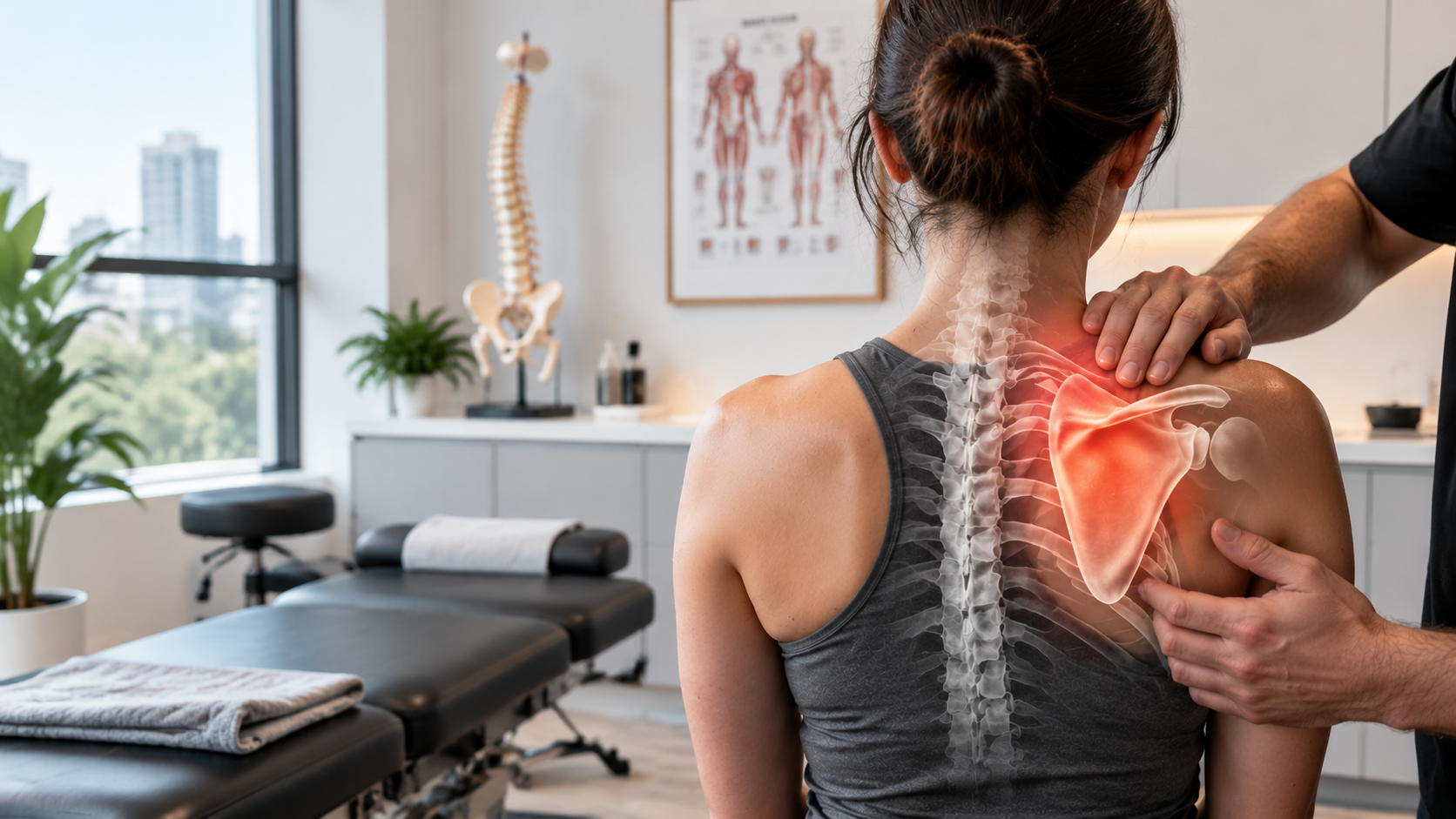
A complete non surgical guide to effective rotator cuff care and shoulder pain relief.
Rotator cuff injuries account for over 70% of all shoulder-related complaints seen by healthcare providers. Whether sparked by repetitive overhead strain, sudden athletic trauma, or age-related tendon degeneration, shoulder dysfunction can quickly derail your ability to work, exercise, and sleep comfortably.
While severe structural ruptures often require surgical intervention, the vast majority of mild-to-moderate tendon strains, partial tears, and impingements respond remarkably well to conservative management. If you are seeking non-invasive rotator cuff treatment Etobicoke, modern chiropractic care offers an evidence-based, conservative pathway to relieve pain, restore range of motion, and re-establish joint stability without relying on injections or invasive procedures.
What Is the Rotator Cuff and Why Is It Vulnerable?
The rotator cuff is a specialised group of four dynamic muscles and their corresponding tendons that surround the glenohumeral (shoulder) joint:
- Supraspinatus – Initiates arm abduction (lifting the arm sideways) and stabilises the head of the humerus.
- Infraspinatus – Facilitates external rotation of the shoulder joint.
- Teres Minor – Assists in external rotation and lateral arm movement.
- Subscapularis – Controls internal rotation and holds the upper arm bone securely in the shoulder socket.
Together, these structures work in harmony to keep the humerus head centred in the shallow glenoid cavity. Because the shoulder is the most mobile joint in the human body, it inherently trades stability for freedom of movement.

When repetitive microtrauma, muscle imbalances, or poor posture alter this complex balance, the rotator cuff tendons can become pinched under the acromion process, a condition known as subacromial impingement, leading to inflammation, micro-tearing, and progressive tendon breakdown.
Recognising the Symptoms of a Rotator Cuff Injury
Identifying rotator cuff distress early prevents localised tissue irritation from escalating into chronic biomechanical dysfunction. Patients typically present with a distinct cluster of clinical symptoms:
- Deep, Dull Shoulder Pain – An ache deep inside the shoulder complex that often worsens with movement or at night.
- Sleep Disturbances – Severe throbbing or sharp pain when lying directly on the affected side, frequently causing awakenings.
- Mobility Restrictions – Loss of active movement when attempting simple tasks like reaching overhead, combing hair, or reaching behind the back.
- Muscle Weakness – A distinct inability to hold the arm elevated or maintain resistance during outward rotation.
- Joint Crepitus and Noises – Audible or tactile clicking, popping, and catching sensations as the arm moves through its range of motion.
When to Seek Chiropractic Care in Etobicoke
Knowing when to consult a practitioner specialising in Shoulder Pain Chiropractic can make a profound difference in recovery timelines. Non-surgical physical therapy and manual care are primary recommendations for non-emergent shoulder conditions.
You should schedule a comprehensive assessment if you experience:
- Lingering Discomfort – Persistent shoulder pain that fails to subside after several days of rest, elevation, and ice applications.
- Functional Limits – Difficulty executing everyday tasks, such as lifting groceries, dressing, or performing job duties.
- Movement Triggers – Pain that spikes predictably during specific arm vectors, such as reaching overhead or across the chest.
- Post-Injury Strain – Mechanical strains resulting from heavy lifting, repetitive overhead sports (tennis, swimming, baseball), or long-standing postural decay.
Red Flag Warning! Seek emergency medical care immediately if your shoulder appears visibly deformed, if you experience sudden and complete paralysis of the arm, or if severe pain is accompanied by numbness radiating down the arm or chest pain.
The Role of Chiropractic Management in Rotator Cuff Injury
Chiropractic management of rotator cuff injuries extends far beyond simple spinal adjustments. A practitioner focused on Sport Injuries Chiropractic utilises a multi-modal conservative approach designed to correct joint mechanics, reduce inflammation, and rebuild soft tissue resilience.

1. Assessment and Clinical Diagnosis
An effective care plan begins with a meticulous physical evaluation to isolate the precise source of tissue dysfunction:
- Range and Strength Checking – Systematic manual muscle testing and active/passive range-of-motion assessments evaluate supraspinatus, infraspinatus, subscapularis, and teres minor output.
- Palpation Touch Testing – Precise manual investigation identifies localised trigger points, tendon insertion tenderness, and soft-tissue swelling.
- Orthopaedic Testing – Specialised clinical tests (e.g., Empty Can, Hawkins-Kennedy, Neer’s Test) pinpoint subacromial impingement and tendon involvement.
- Diagnostic Image Review – Chiropractors evaluate digital X-rays or request diagnostic ultrasound/MRI scans when severe structural tears or labral damage are suspected.
2. Multi-Modal Treatment Options
Once a diagnosis is confirmed, a tailored rotator cuff treatment Etobicoke protocol is established, combining multiple conservative modalities:
| Modality | Clinical Objective |
| Soft Tissue Therapy | Techniques such as Active Release Technique (ART), myofascial release, and pin-and-stretch release tight pectorals, upper trapezius, and infraspinatus muscles. |
| Joint Mobilization | Low-velocity manual mobilisations to the glenohumeral, acromioclavicular, and thoracic spine joints improve joint glide and relieve mechanical impingement. |
| Therapy Modalities | Low-Level Laser Therapy (LLLT), dry needling, and thermal applications reduce localised oedema, stimulate cellular repair, and modulate pain signalling. |
| Rehabilitation Exercises | Structured movement plans transition the shoulder from passive relief to active structural strengthening. |
Scientific evidence strongly supports this conservative approach. Systematic research published in the Cochrane Database of Systematic Reviews demonstrates that combination therapy, utilising manual therapy alongside targeted physical exercises, provides clinically meaningful improvements in pain, functional range of motion, and overall patient-reported success for rotator cuff conditions.
Furthermore, comparative clinical research in BMC Musculoskeletal Disorders indicates that conservative management strategies yield functional outcome scores (such as Constant-Murley scores) comparable to arthroscopic surgical repairs in non-traumatic and partial-thickness rotator cuff tears over 1-to-2-year follow-ups, making non-invasive care an essential first step.
Targeted Rehabilitation – Specific Recovery Exercises
Active rehabilitation is the cornerstone of long-term tendon recovery. Once acute inflammation subsides, implementing progressive strengthening exercises helps restore dynamic stability. Perform these movements smoothly without forcing painful ranges.
Exercise 1 – Four-Way Shoulder Isometrics
- How – Stand near a solid wall. Press your hand or forearm against the wall to contract the shoulder musculature without moving the actual joint.
- Directions – Execute four vectors: forward push (flexion), backward press (extension), inward rotation (internal rotation), and outward rotation (external rotation).
- Volume – Hold each contraction at 30–50% effort for 5 seconds. Slowly release. Perform 3 sets of 5 repetitions per direction daily.
Exercise 2 – The Y-Raise
- How – Stand with an upright posture, chest open, and shoulders retracted. Raise both arms forward and outward at a 45-degree angle (forming a “Y” shape relative to your torso) up to eye level. Focus on squeezing the lower trapezius rather than shrugging the neck.
- Volume – Hold for 2 seconds at the peak, then lower under control over 3 seconds. Complete 3 sets of 10 to 15 repetitions.
Exercise 3 – Side-Lying External Rotation
- How – Lie on an exercise mat on your uninjured side. Place a small rolled towel under the elbow of your injured arm, bending the elbow to a 90-degree angle. Keeping the elbow pinned to your side, slowly rotate your forearm upward toward the ceiling.
- Volume – Pause briefly at the top, then slowly lower back down. Complete 3 sets of 10 to 15 controlled repetitions.
Frequently Asked Questions (FAQs)
Q1 – Can a chiropractor fix a torn rotator cuff without surgery?
A – Yes, for mild-to-moderate partial tears, tendonitis, and subacromial impingements. Conservative chiropractic care, combining soft tissue therapy, joint mobilisation, and targeted rehabilitation exercises, helps restore full function and control pain without surgery. However, full-thickness structural ruptures or severe traumatic tears may require a referral for orthopaedic surgical evaluation.
Q2 – How do I sleep comfortably with a rotator cuff injury?
A – Avoid sleeping directly on the injured shoulder, as pressure exacerbates inflammation. The best position is lying on your back with a pillow tucked under your arm to keep the shoulder slightly elevated and neutral. If you prefer side-sleeping, lie on the uninjured side and hug a thick pillow against your chest to support your affected arm and prevent forward collapsing.
Q3 – How long does chiropractic rehabilitation take for a rotator cuff injury?
A – Recovery timelines depend on injury severity, age, and adherence to prescribed home exercises. Minor strains and impingements typically show noticeable improvement within 4 to 6 weeks of consistent treatment. Partial tears or long-standing chronic conditions may require 8 to 12 weeks of structured joint mobilisation and progressive resistance training to regain optimal stability.
Q4 – Will a shoulder adjustment pop my rotator cuff back into place?
A – Rotator cuff injuries involve muscles and tendons rather than a simple joint displacement. Chiropractic treatment does not involve forcefully “popping” tendons. Instead, gentle adjustments and mobilisations are applied to the shoulder blade, collarbone, and thoracic spine to align the surrounding joint mechanics, taking physical pressure off the pinched rotator cuff tendons.
Q5 – Should I use ice or heat for rotator cuff shoulder pain?
A – Use ice during the acute stage (first 48 to 72 hours after a strain or after intense exercise) to numb sharp pain and reduce swelling. Transition to heat before performing rehabilitation exercises or during chronic recovery stages to relax tight surrounding muscles, increase blood flow, and improve joint flexibility.
Comprehensive Recovery Outcomes with Etobicoke Chiro
Navigating a shoulder injury requires a coordinated plan that bridges immediate symptom relief with long-term functional retraining. Clinics like Etobicoke Chiro provide comprehensive evaluations, joint mobilisations, soft tissue treatments, and guided home exercises designed to help you regain full, pain-free movement.
By combining evidence-based manual therapy with structured active exercise, patients seeking professional rotator cuff treatment in Etobicoke can address biomechanical root causes, protect tendon health, and return to an active lifestyle without unnecessary surgical risks.