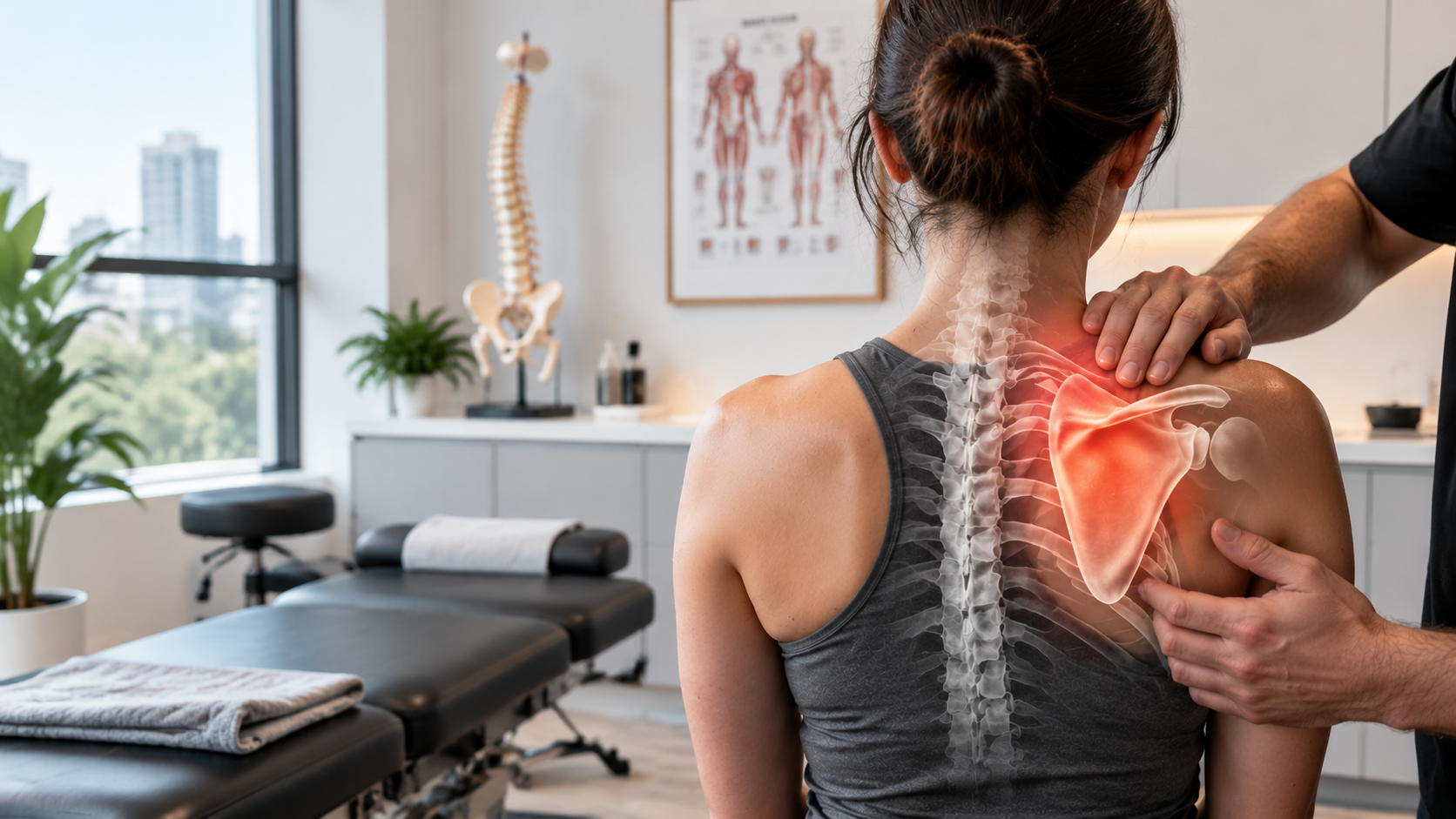
Relieve shoulder impingement pain with non-surgical chiropractic care at Etobicoke Chiro.
A pinch of sharp pain every time you reach into the back seat, grab a coffee cup from an upper shelf, or try to sleep on your side can completely disrupt your daily life. If this frustrating pinch sounds familiar, you are likely dealing with shoulder impingement syndrome (SIS).
At Etobicoke Chiro, we regularly treat individuals struggling with subacromial space narrowing and biomechanical strain. As one of the most common causes of shoulder pain, shoulder impingement in Etobicoke patients often leads to the question of whether surgery is inevitable.
The good news? High-level clinical research reveals that systematic conservative care, combining soft tissue release, progressive strengthening, and specialised chiropractic joint adjustments, delivers results comparable to, and often safer than, surgical intervention.
What Is Shoulder Impingement Syndrome?
To understand how to heal your shoulder, you first need to understand its unique structure. The shoulder joint (glenohumeral joint) is a ball-and-socket setup built for incredible mobility. However, that mobility comes at the cost of structural space.
Sitting directly above the main ball of your upper arm bone (humeral head) is a bony arch called the acromion. The narrow gap between this bone and your shoulder joint is known as the subacromial space. Running directly through this tight corridor are key structures:
- The supraspinatus tendon (part of the rotator cuff)
- The biceps tendon
- The subacromial bursa (a fluid-filled sac designed to reduce friction)

When you lift or rotate your arm, the rotator cuff muscles pull the ball down to keep it centred. If those muscles are weak, or if the surrounding joints are misaligned, the ball rides upward, compressing the soft tissue against the rigid acromion roof.
Over time, this repetitive pinching leads to localised inflammation, micro-tears, severe aching, and movement limitation.
Searching for a dedicated shoulder impingement specialist in Etobicoke is the crucial first step toward restoring proper joint space and preventing chronic tendon breakdown.
Non-Surgical Treatments for Lasting Recovery
Shoulder impingement is treated primarily with Physical therapy, rest, and anti-inflammatory care to reduce pain and restore normal shoulder movement. Most people heal without surgery by following a conservative care plan over several weeks or months.
When conservative care is structured properly, non-surgical protocols resolve up to 80% to 90% of subacromial impingement cases. The core conservative pillars include:
- Rest & Activity Modification – Temporarily stop doing activities that cause pain, especially lifting items or reaching over your head. Avoid sleeping directly on the injured side to prevent structural compression overnight.
- Targeted Ice Therapy – Put a cold pack wrapped in a thin towel on the front or top of the shoulder for 15 to 20 minutes a few times a day to numb acute pain and control localised swelling.
- Medication – Over-the-counter non-steroidal anti-inflammatory drugs (NSAIDs) like ibuprofen help ease acute pain and reduce tissue swelling around the bursa.
- Physical Therapy & Functional Care – A therapist or specialised chiropractor guides you through stretching and strengthening routines to support the rotator cuff and recalibrate scapular mechanics.
- Steroid Injections – If basic conservative steps fail to lower inflammation enough to perform exercises, a physician may inject a corticosteroid directly into the subacromial bursa. This temporary reduction in inflammation allows you to participate in active rehabilitation.
Targeted Rehabilitation Exercises
Active movement restoration is mandatory to keep the shoulder blade tracking smoothly. Here are three foundational rehab movements commonly prescribed at our clinic:
1. External Rotation with a Resistance Band
- Why it helps – Strengthens the infraspinatus and teres minor, pulling the ball of the shoulder down and backwards away from the acromion roof.
- How to do it – Pin your elbow to your side with a rolled towel, hold a resistance band anchored in front of you, and slowly pull your hand outward while keeping your elbow bent at 90 degrees. Perform 3 sets of 12 controlled repetitions.
2. Doorframe Chest Stretch
- Why it helps – Lengthens tight pectoralis minor and major muscles that pull the shoulder blade forward into a slumped, impingement-prone posture.
- How to do it – Place your forearm against a doorframe at shoulder height and gently step forward or turn your body away until you feel a deep, comfortable stretch across the chest. Hold for 30 seconds; repeat 3 times.
3. Shoulder Scaption (V-Raises)
- Why it helps – Targets the supraspinatus and lower trapezius along the natural angle of the shoulder blade (scapular plane), encouraging proper upward rotation.
- How to do it – Stand tall holding lightweight dumbbells at your sides. Raise your arms forward and slightly outward in a gentle “V” shape (roughly 30 to 45 degrees off centre) up to shoulder height. Lower slowly over 3 seconds. Complete 3 sets of 10 repetitions.
Understanding Surgical Options
Many patients wonder: Is surgery necessary for shoulder impingement?
Subacromial Decompression – Surgery is rare and only considered if months of comprehensive conservative treatment fail. During an arthroscopic subacromial decompression, a surgeon trims away a portion of the bony acromion or removes inflamed bursa tissue to physically create more room for the rotator cuff tendons.
What Does the Clinical Research Say?According to a landmark meta-analysis published in the British Journal of Sports Medicine (BJSM), conservative management, specifically physical exercise paired with targeted manual therapy, demonstrated significant effectiveness in reducing pain and improving active range of motion. Furthermore, high-level clinical trials synthesised by the National Institutes of Health (NCBI) indicate that non-operative rehabilitation yields long-term functional outcomes comparable to subacromial decompression surgery, making conservative care the clear, lower-risk first line of defence. |
Seeking guidance from an experienced shoulder pain relief therapist in Etobicoke ensures you receive a thorough physical assessment before considering invasive procedures.
How Chiropractic Care Restores Shoulder Mechanics
Many people think chiropractors only treat back pain, but shoulder mechanics depend heavily on full kinetic chain alignment. A chiropractor treats shoulder impingement by addressing both the local shoulder joint mechanics and the surrounding spinal areas (such as the neck and upper back/thoracic spine) that directly impact how your shoulder blade slides and rotates.
If your upper back is rounded (hyperkyphosis) or stiff, your shoulder blade tilts forward. This tilt instantly reduces subacromial space by up to 50%, locking the shoulder into an impingement state every time you lift your arm.
By applying targeted adjustments to the thoracic spine and ribs, chiropractors unlock healthy postural extension. Studies evaluating thoracic spinal manipulation show immediate reductions in shoulder pain scores and statistically significant increases in active shoulder abduction and flexion range of motion.
Integrating shoulder pain chiropractic treatments with active physical rehab provides a dual-action solution – joint adjustment restores structural alignment, while exercise stabilises the newly achieved movement range.
Common Pain Triggers & Clinical Chiropractic Management
The table below outlines common movements that trigger pain in impingement patients and details how a chiropractor manages each mechanical breakdown:
| Pain Trigger Movement | What Is Happening Biomechanically | Chiropractic Treatment Approach |
| Overhead Reaching / Lifting | The arm bone (humeral head) presses the rotator cuff tendons up against the bone at the top of the shoulder (acromion) due to poor upward scapular rotation. | Thoracic Manipulation & Joint Mobilization – Adjusting the upper back (thoracic spine) restores natural spinal extension, allowing the shoulder blade to rotate upward safely and opening up space in the joint. |
| Reaching Across the Body / Behind Back | Severe tightness in the posterior shoulder capsule jams the ball of the arm bone forward into sensitive anterior joint tissue. | Extremity Adjustments & Soft Tissue Therapy – Applying targeted, gentle manual traction or rapid adjustments directly to the glenohumeral joint resets sliding mechanics. Techniques like Active Release Technique (ART) or cross-friction massage untangle tight tendons. |
| Sleeping on the Affected Side | Grappling with body weight directly compresses an already inflamed bursa or rotator cuff tendon against joint structures overnight. | Inflammation Control & Ergonomic Coaching – The chiropractor uses modalities like low-level laser or therapy ultrasound to calm initial inflammation. They prescribe custom sleep postures or pillow support to remove body weight from the joint space overnight. |
| Pushing / Pulling Activities | Weakness in stabilizing rotator cuff muscles causes the arm bone to track abnormally, rubbing against sharp bone edges during heavy tasks. | Rehabilitation Exercise Prescription – The chiropractor builds a progressive home exercise program focusing on external rotation to pull shoulders back, paired with shoulder blade retractions to stabilize mechanics. |
Why Postural Chains & Scapular Dyskinesis Matter
To achieve true recovery, we must look beyond local shoulder symptoms. Modern clinical evidence highlights Scapular Dyskinesis, an alteration in normal shoulder blade position and motion, as a primary root cause of recurring shoulder impingement.

When you slouch over a desk or smartphone, your upper thoracic spine curves forward. This positioning forces your shoulder blade to tip forward and slide outward away from the spine. As a result, when you raise your arm:
- The acromion fails to clear the top of the humerus.
- The supraspinatus tendon gets ground between the bones repeatedly.
- Pain causes surrounding muscles to spasm, worsening the poor posture in a vicious cycle.
Ergonomic Tips for Immediate Relief
To break this cycle, implement these functional adjustments throughout your day:
- Desk Ergonomics – Keep your elbows bent at 90 degrees and supported by armrests to prevent the weight of your arms from dragging your shoulder blades forward.
- The “Pillow Wedge” Sleep Position – When sleeping on your uninjured side, hug a thick pillow against your chest to support your top arm. This prevents the upper shoulder from collapsing forward and compressing the subacromial space.
- Micro-Breaks – Every 45 minutes, perform 5 shoulder blade squeezes (pinching your lower shoulder blades together and down) to reset mid-back muscular tone.
By correcting full-body kinetic chains, a qualified shoulder impingement Etobicoke practitioner can resolve chronic symptoms rather than just masking them temporarily.
Take Control of Your Shoulder Health
Living with sharp, persistent shoulder pain isn’t something you simply have to endure. With early, evidence-based conservative treatment, combining progressive rehab exercises, manual soft tissue therapy, and precision chiropractic care, you can reclaim pain-free overhead reaching, comfortable sleeping, and peak physical strength.
If shoulder pain is holding you back from enjoying daily life, visit Etobicoke Chiro today to consult with an expert shoulder pain relief therapist in Etobicoke. Our team will build a tailored rehabilitation plan designed to restore your joint mechanics, eliminate inflammation, and get you back to moving freely.