

Discover how targeted chiropractic care in Etobicoke restores shoulder motion naturally.
Shoulder pain can make even simple daily activities, like reaching into a high cupboard, putting on a jacket, or sleeping comfortably, feel nearly impossible. Given the shoulder’s complex anatomy and wide range of motion, pinpointing the true source of discomfort requires a thorough functional evaluation.
For residents seeking non-invasive, drug-free relief, shoulder pain chiropractic therapy in Etobicoke addresses the root biomechanical issues causing joint dysfunction, rather than simply masking symptoms. Whether you are dealing with a sports-related strain, desk-posture fatigue, or a chronic impingement, working with a shoulder pain chiropractor Etobicoke patients trust can help restore full mobility and long-term joint health.
At Etobicoke Chiro, care plans are tailored to target the root causes of shoulder discomfort through comprehensive physical examinations, spinal and joint adjustments, targeted soft tissue therapy, and progressive rehabilitation.
Anatomy of the Shoulder – Why Mechanical Pain Occurs
To understand why shoulder pain develops, it helps to look at the joint’s unique design. The shoulder is the most mobile joint in the human body, but that mobility comes at the expense of inherent stability.
The shoulder complex relies on a delicate balance between four major structural components:
- The Humerus – The upper arm bone that fits into the socket.
- The Scapula – The shoulder blade, which serves as the foundational anchor for movement.
- The Clavicle – The collarbone, connecting the arm to the central skeleton.
- The Rotator Cuff – A group of four muscles (supraspinatus, infraspinatus, teres minor, and subscapularis) that clamp the humerus into its shallow socket.
Because the socket (glenoid) is shallow, similar to a golf ball sitting on a tee, the joint relies heavily on dynamic muscular control rather than deep bony sockets. If the thoracic spine becomes stiff, or if muscle imbalances pull the shoulder blade out of position, the entire mechanical chain is disrupted. This can lead to localised inflammation, micro-tears, and chronic pain.
Common Shoulder Conditions Treated with Chiropractic Care
A skilled shoulder pain chiropractor in Etobicoke evaluates both local joint tissues and connected spinal mechanics. Below are the primary conditions successfully managed through chiropractic care:
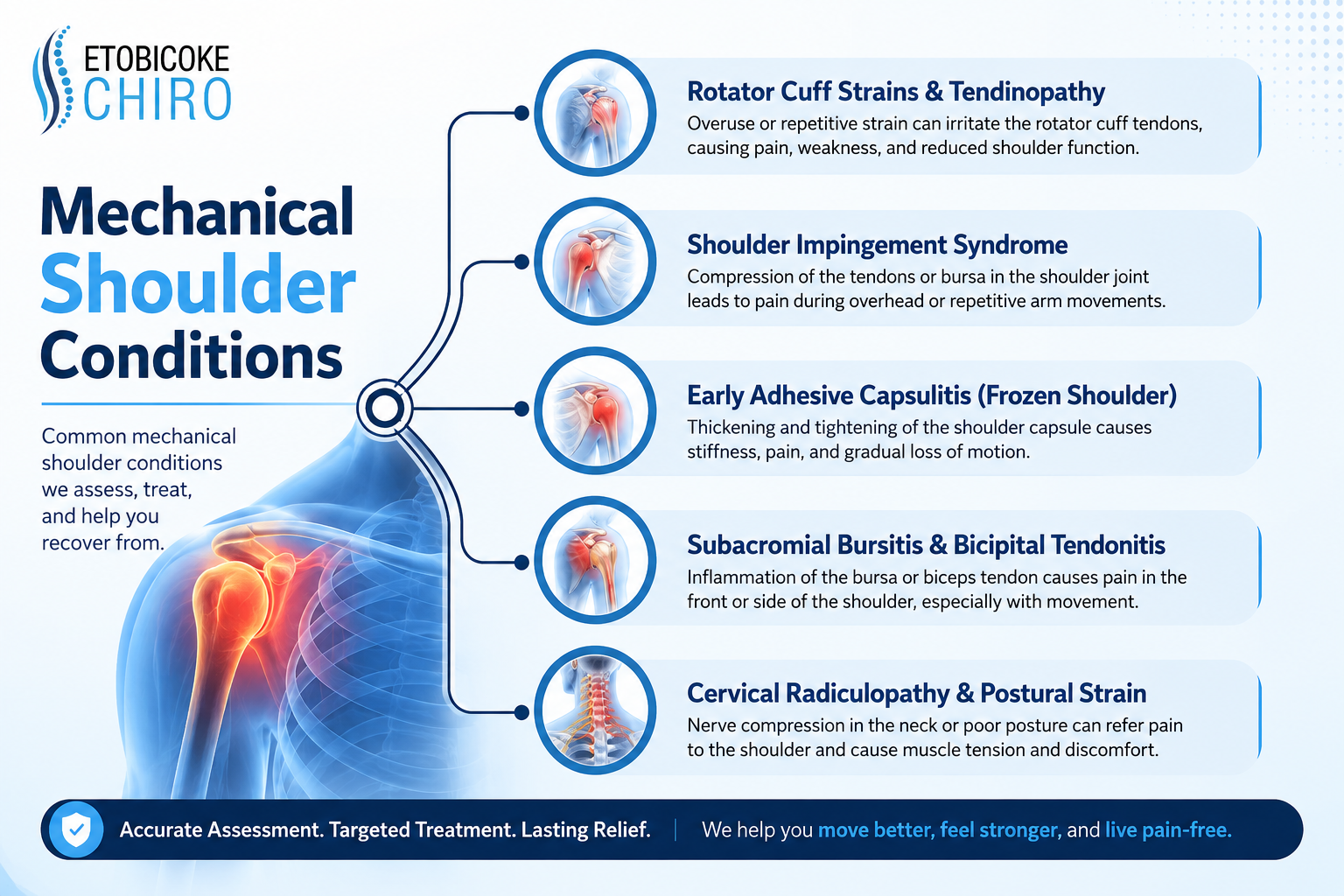
1. Rotator Cuff Strains and Tendinopathy
The rotator cuff muscles work continuously to keep the shoulder centred. Micro-tears or overuse inflammation in these tendons often stem from repetitive overhead throwing, swimming, painting, or heavy lifting. Patients usually experience a deep ache in the shoulder that worsens at night or during overhead movement.
2. Shoulder Impingement Syndrome
Impingement occurs when the space beneath the acromion (the bony roof of the shoulder) narrows. When elevating the arm, subacromial bursae or rotator cuff tendons become compressed against the bone, causing sharp, localised pain, typically between 60° and 120° of movement.
3. Frozen Shoulder (Adhesive Capsulitis)
Characterised by progressive stiffness and severe movement restrictions, frozen shoulder occurs when the flexible joint capsule becomes inflamed, thickened, and tight. Manual mobilisation and therapeutic stretches help preserve range of motion and accelerate recovery through the freezing, frozen, and thawing phases.
4. Bursitis and Bicipital Tendonitis
Bursae are small fluid-filled sacs that reduce friction between bones and tendons. Repetitive strain can cause these sacs to inflame, often alongside the long head of the biceps tendon at the front of the shoulder, resulting in sharp, focal pain.
5. Postural Dysfunction and Cervical Referred Pain
Sitting at a desk for extended periods often leads to rounded shoulders and forward head posture. This position shortens the chest muscles (pectoralis major/minor) and weakens the upper back muscles (rhomboids and lower trapezius), forcing the shoulder joint to operate at an unnatural, strain-inducing angle.
Quick Symptom Checker – Identifying Your Pain Pattern
Use this reference table to better understand what your specific pain patterns may indicate:
| Functional Pain Pattern | Most Likely Underlying Issue | Typical Biomechanical Cause |
| Pain between 60° and 120° of lifting the arm | Impingement Syndrome | Reduced subacromial space compressing tendons |
| Severe stiffness, unable to reach behind back | Adhesive Capsulitis (Frozen Shoulder) | Fibrotic thickening of the joint capsule |
| Inability to lift the arm overhead due to weakness | Rotator Cuff Tear (Partial or Complete) | Structural tear in stabilising muscles/tendons |
| Sharp pain on top of the shoulder when reaching across | AC Joint Sprain or Arthritis | Compression of the acromioclavicular joint |
| Sharp, shooting pain or numbness down into fingers | Cervical Radiculopathy | Compressed nerve root in the neck (C5–C6) |
Painful Movements, Causes, and Focused Chiropractic Interventions
Movement analysis provides valuable clues during a physical examination. Specific arm paths trigger distinct anatomical structures:
Lifting the Arm Overhead or Sideways (Pain at 60°–120°)
- The Issue – Shoulder Impingement Syndrome. As the arm lifts, the humerus compresses the subacromial bursa and supraspinatus tendon against the acromion.
- Chiropractic Care – Low-velocity joint mobilisation widens the subacromial space. This is combined with scapular stabilisation exercises to restore normal upward rotation of the shoulder blade.
Reaching Behind the Back (Tucking in a shirt, fastening a bra)
- The Issue – Rotator Cuff Tendonitis or Posterior Capsule Tightness. This internal rotation motion compresses an inflamed subscapularis tendon or stretches an adherent rear joint capsule.
- Chiropractic Care – Practitioners apply Active Release Techniques (ART) or Instrument-Assisted Soft Tissue Mobilisation (IASTM/Graston) to break up tight fascial adhesions in the posterior shoulder capsule.
Reaching Across the Body to the Opposite Shoulder
- The Issue – Acromioclavicular (AC) Joint Dysfunction. Horizontal adduction compresses the joint where the collarbone meets the top of the shoulder blade.
- Chiropractic Care – Adjustments directed to the clavicle and scapula help restore joint tracking, while kinesiology taping reduces tension on the AC joint.
Throwing Motion or Reaching into the Back Seat
- The Issue – Bicipital Tendonitis or Supraspinatus Strain. Extended acceleration and external rotation place significant load on the biceps groove and front rotator cuff structures.
- Chiropractic Care – Treatment incorporates eccentric strength rehabilitation to rebuild tendon capacity, supported by Class 4 laser therapy to lower localised inflammation.
Whole-Body Biomechanics – The Spine-Shoulder Connection
The shoulder does not work in isolation. It relies on postural alignment across the entire kinetic chain. A core component of shoulder pain chiropractic therapy is assessing connected structures, including the neck and mid-back.
Thoracic Spine Adjustments
The upper and mid-back must extend and rotate to allow the shoulder blade to glide smoothly. If the thoracic spine is stiff or rounded, the shoulder blade tilts forward, reducing overhead reach and increasing impingement risk. Spinal adjustments restore thoracic extension, instantly clearing space for arm elevation.
Cervical Spine Screenings
Nerves that power the shoulder muscles exit from the C5, C6, and C7 levels of the neck. A misaligned cervical vertebra or bulging disc can irritate these nerve roots, causing referred pain, muscle inhibition, or persistent weakness in the deltoid and rotator cuff.
Postural Re-Education and Ergonomics
Restoring biomechanics requires addressing daily posture habits. Care plans include chest-opening stretches, mid-back strengthening exercises, and ergonomic recommendations to keep the shoulders aligned during daily tasks.
Evidence-Based Modalities Used in Etobicoke Chiropractic Clinics
Modern chiropractic practices in Etobicoke combine manual therapies with advanced physical medicine tools to support recovery:
- Spinal & Extraspinal Joint Adjustments – Precise adjustments to the thoracic spine, neck, clavicle, and glenohumeral joint to restore mechanical motion and reduce joint restrictions.
- Active Release Techniques (ART) & Soft Tissue Therapy – Target hypertonic muscles, scar tissue, and fascial restrictions to improve movement and reduce muscle tension.
- Class 4 Laser Therapy – High-power laser light penetrates deep into tissues to stimulate cellular ATP production, reduce pain signals, and accelerate tissue repair.
- Extracorporeal Shockwave Therapy (ESWT) – Acoustic sound waves break down calcifications in chronic tendinopathies (e.g., calcific supraspinatus tendinitis) and stimulate localised collagen production.
- Custom Rehabilitation Protocols – Controlled exercises designed to strengthen the rotator cuff, stabilise the scapular anchors, and protect against recurrent injury.
Triage Guide – Mechanical vs. Surgical & Medical Conditions
Chiropractic care excels at treating functional and mechanical shoulder disorders. However, severe structural damage or non-neuromusculoskeletal symptoms require prompt medical or surgical referral.
Conditions Managed with Chiropractic Care
- Mild-to-moderate rotator cuff tendinopathy and overuse strains
- Subacromial shoulder impingement syndrome
- Stage 1 and Stage 2 adhesive capsulitis (frozen shoulder)
- Cervicogenic referred pain and upper thoracic joint dysfunction
- Bicipital tendinitis and subacromial bursitis
Conditions Requiring Urgent Medical Evaluation
- Complete Rotator Cuff Tears – A full-thickness tear prevents active elevation of the arm (“dead arm”) and often requires orthopaedic consultation for surgical reattachment.
- Acute Dislocations & Instability – Traumatic shoulder dislocations require emergency reduction and imaging to rule out labral tears or fractures.
- Fractures – Suspected fractures of the clavicle, humerus, or scapula need immobilisation and orthopaedic management.
- Septic Arthritis (Joint Infection) – Sudden, intense shoulder pain accompanied by localised heat, swelling, redness, and fever is a medical emergency requiring antibiotics.
- Referred Visceral Pain (Emergency) – Unexplained left shoulder pain paired with chest pressure, shortness of breath, or sweating may indicate a cardiovascular event (heart attack) and requires immediate emergency care (911). Right shoulder pain can occasionally stem from gallbladder or hepatic issues.
Mechanical Care vs. Surgical Referral
| Clinical Feature | Suitable for Chiropractic Care | Urgent Medical / Surgical Referral |
| Onset | Gradual onset or minor strain | Sudden high-impact trauma, fall, or crash |
| Motor Function | Painful movement, but arm can be lifted | Inability to lift arm overhead |
| Visual Appearance | Normal contour, minor localised swelling | Visible deformity or joint displacement |
| Systemic Signs | None; pain is localised | Fever, chills, chest pain, or dyspnea |
| Diagnostic Imaging | Mild osteophytes or intact tendons on MRI | Complete tendon rupture or labral avulsion |
Comprehensive Causes of Shoulder Pain
Understanding how shoulder injuries develop helps in choosing the right recovery strategy. Causes generally fall into three categories:
1. Mechanical and Overuse Causes
- Rotator Cuff Tendinitis – Micro-tears in stabilising tendons caused by repetitive overhead motions in sports, construction, or maintenance work.
- Subacromial Bursitis – Friction-induced inflammation of the bursa sac between the acromion and rotator cuff.
- Postural Deconditioning – “Tech neck” and slouched posture pull the shoulders forward, placing stress on the upper back muscles and shoulder joints.
2. Traumatic and Structural Causes
- Labral Tears (SLAP / Bankart) – Damage to the cartilage ring cushioning the socket, causing popping, clicking, or catching sensations during movement.
- Acromioclavicular (AC) Joint Sprains – Often called a “separated shoulder,” this occurs from direct falls onto the tip of the shoulder.
- Rotator Cuff Tears – Traumatic or degenerative tears through the muscle body or tendinous insertion.
3. Referred and Systemic Causes
- Cervical Radiculopathy – Compressed nerve roots in the neck radiating pain down into the shoulder blade and arm.
- Glenohumeral Osteoarthritis – Progressive breakdown of cartilage leading to joint stiffness and grinding (crepitus).
- Systemic Visceral Pain – Radiating visceral pain from cardiac events (left shoulder) or gallbladder disease (right shoulder).
What to Expect at Your First Chiropractic Visit
If you are visiting a shoulder pain chiropractor Etobicoke clinic for the first time, your initial evaluation typically lasts between 45 and 70 minutes.
- Comprehensive History – A discussion of your symptoms, onset, everyday movement demands, and medical history.
- Functional Neuromusculoskeletal Exam – Physical tests to evaluate range of motion, rotator cuff strength, neurological health, cervical spine function, and shoulder blade mechanics.
- Diagnostic Imaging – If a severe tear, fracture, or joint degradation is suspected, your chiropractor may order X-rays or request an MRI.
- Customised Treatment Plan – A targeted treatment protocol combining manual therapy, soft tissue care, modalities, and home rehabilitation exercises.
Costs and Insurance Coverage in Ontario
Understanding fees and insurance options helps you plan your care effectively:
- Initial Assessment Fee – Typically ranges from $80 to $175, covering a comprehensive evaluation, diagnosis, and initial treatment.
- Follow-Up Session Fee – Usually ranges between $50 and $100 per standard session, depending on the modalities used (e.g., laser therapy or shockwave).
- OHIP Coverage Details – Routine chiropractic care is not covered by the Ontario Health Insurance Plan (OHIP).
- Extended Health Benefits – Most private, employer-sponsored group health insurance plans cover a significant portion, or all, of chiropractic visits and prescribed rehab devices. Many Etobicoke clinics offer direct billing to extended health carriers for convenience.
- WSIB & Auto Claims – Chiropractic care is typically covered for workplace injuries (WSIB) and motor vehicle accidents (MVA claims).
Preventive Exercise Routine for Shoulder Health
Incorporating basic daily exercises can help keep the shoulders stable, open up the subacromial space, and protect against recurrent strain:
1. Doorway Pectoral Stretch
Stand in an open doorway, bend your elbows to 90°, and place your forearms against the doorframe. Step forward gently until you feel a comfortable stretch across your chest. Hold for 30 seconds to help open up rounded shoulders.
2. Scapular Wall Slides
Stand with your back, head, and heels flat against a wall. Raise your arms into a “W” position with your elbows and wrists touching the wall. Slowly slide your hands upward into a “Y” position without arching your lower back. Repeat for 10–12 controlled reps to activate the lower trapezius and serratus anterior.
3. Sidelying External Rotation
Lie on your side with a small rolled towel tucked under your upper arm. With your top elbow bent at 90 degrees, hold a light weight (1–3 lbs), and slowly rotate your forearm upward toward the ceiling. Pause at the top, then lower slowly. Perform 2 sets of 12 reps to strengthen the rotator cuff muscles.
Frequently Asked Questions (FAQs)
1. How many chiropractic sessions will I need for shoulder pain?
The number of sessions depends on the cause, severity, and duration of your shoulder pain. Acute rotator cuff strains or mild impingements often show noticeable improvement within 4 to 8 sessions over 3 to 4 weeks. Chronic or severe conditions like adhesive capsulitis (frozen shoulder) may require 8 to 16+ visits integrated with dedicated home rehabilitation to fully restore mobility and strength. Your chiropractor will outline a personalised timeline during your initial assessment.
2. Is chiropractic treatment safe for rotator cuff injuries?
Yes, chiropractic care is safe and non-invasive for mild-to-moderate rotator cuff strains and tendinopathies. Chiropractors use precise, low-force joint mobilisations, soft tissue therapy (such as Active Release Technique), and targeted exercise programs that protect the injured tendon while promoting healing. If a physical exam or diagnostic imaging reveals a full-thickness rotator cuff tear, your chiropractor will promptly refer you to an orthopaedic surgeon or medical specialist.
3. Will OHIP cover my shoulder pain chiropractic visits in Etobicoke?
Routine chiropractic care is not covered by OHIP (Ontario Health Insurance Plan). However, most extended health benefit plans through employers or private insurance cover chiropractic assessments and ongoing care. Many clinics in Etobicoke offer direct billing to major insurance providers to streamline your claim process. Additionally, treatments for injuries sustained at work (WSIB) or in a car accident (MVA claims) are fully covered.
4. Should I see a chiropractor or a physiotherapist for shoulder pain?
Both professions treat shoulder injuries effectively, and they often complement one another. A shoulder pain chiropractor focuses heavily on the complete kinetic chain, ensuring the cervical spine, thoracic spine, collarbone, and shoulder joint are properly aligned so nerves and muscles function without interference. They also incorporate soft tissue therapy, physical modalities (laser/shockwave), and rehab exercises. Many patients achieve optimal results through a combined approach.
5. Can a problem in my neck cause pain in my shoulder?
Yes, absolutely. Nerves that control the muscles of the shoulder, arm, and hand exit from the lower neck (cervical spine, specifically levels C5, C6, and C7). If a cervical vertebra is misaligned or a spinal disc pinches a nerve root, a condition known as cervical radiculopathy, it can cause sharp, aching, or burning pain that radiates directly into your shoulder blade and upper arm. Treating the neck is often key to resolving shoulder symptoms permanently.
Take Control of Your Shoulder Health Today
Shoulder pain does not have to restrict your mobility or limit your daily routines. By identifying structural imbalances early, recovering proper joint movement, and strengthening key stabilising muscles, chiropractic care offers an effective path to long-term recovery.
If shoulder pain is holding you back, reach out to Etobicoke Chiro to book a comprehensive shoulder assessment. Working with an experienced shoulder pain chiropractor in Etobicoke can help you find lasting relief, restore comfortable movement, and get back to living pain-free.





