
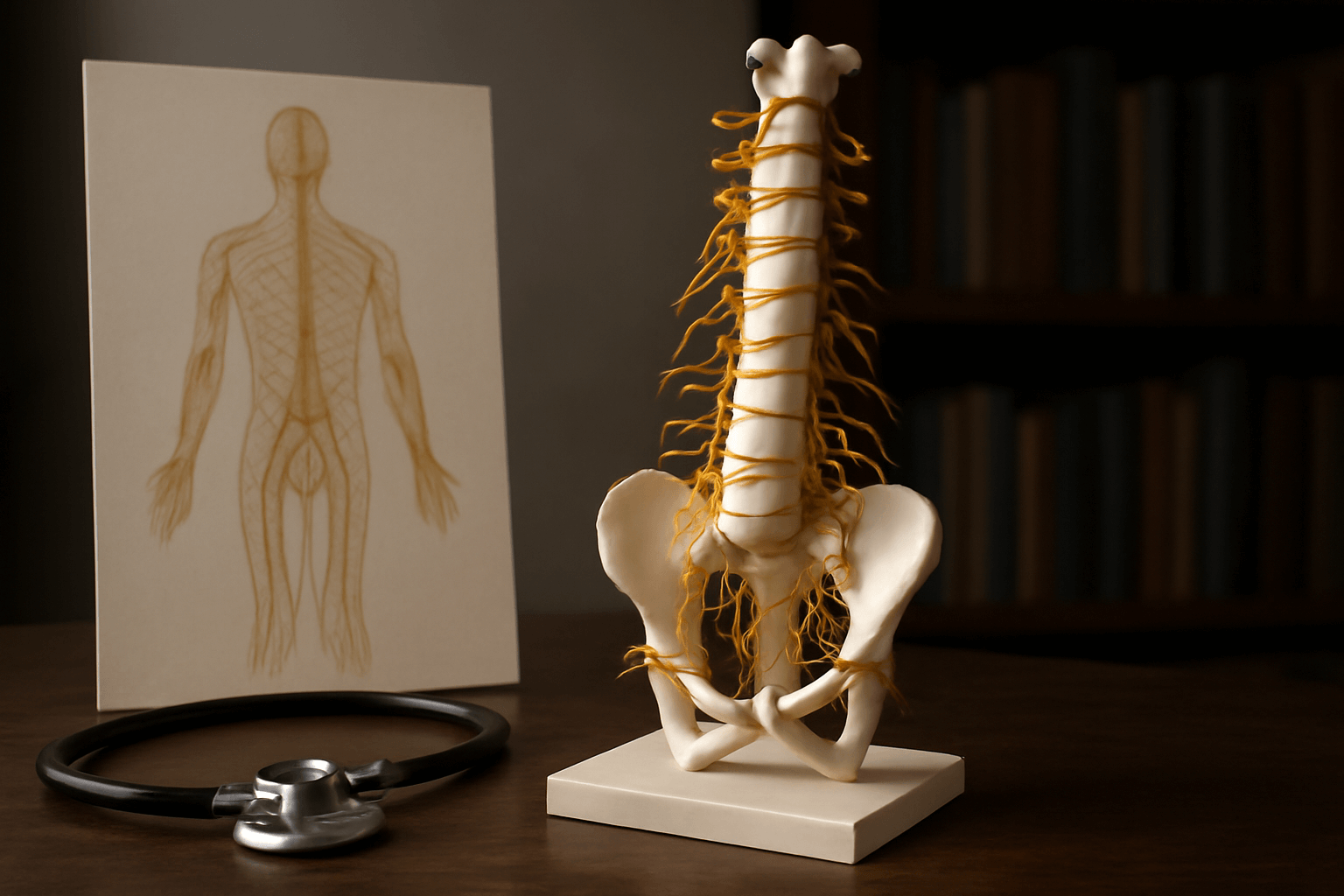
Keeping your body moving is a vital part of your life. Many of our movements happen without our conscious awareness. This is where the nervous system plays its crucial role, continuously monitoring, reacting, and adjusting to maintain the balance, stability, and safety of our bodies.
Considering the automatic control of our body, one cannot overlook discussing spinal reflexes. These reflexes are rapid and involuntary responses managed by specialised circuits within the spinal cord. These reflexes are essential for protecting the body, maintaining your posture, and facilitating smooth, coordinated movement.
What Are Spinal Reflexes?
Not sure what spinal reflexes are? The answer is quite simple. These spinal reflexes are automatic, involuntary responses to specific stimuli that occur without the direct involvement of your brain.
Due to these reflexes, your body benefits from reacting quickly to potential harm or sudden changes in the environment by avoiding slower brain processing. Moreover, your spinal cord also acts as the central processing unit for these reflexes. One of the main purposes of your spinal cord is to receive sensory information and produce motor commands the moment it gets a message. This quick reaction is highly vital to your body, which protects it from any harmful situations and maintains stable movement.
By knowing how these spinal reflexes work for living beings, you can get information about how the nervous system functions to preserve bodily integrity and enable fluid motion in unpredictable environments.
Understanding the Anatomy of a Spinal Reflex
The reflex arc is considered the source of neural stimulation that causes the reflexes. They help in translating a sensation into a physical reflex response.
- Sensory Receptors: These specialised cells are found in muscles, tendons, and joints. They are sensitive to mechanical changes, such as stretching, tension, or pain, and detect stimuli from both the external and internal environments.
- Sensory Neurons: After receptor activation, these neurons transmit the sensory signals from the periphery towards the spinal cord.
- Interneurons: Present mainly in complex reflexes, these neurons reside within the spinal cord and process incoming signals, influencing the nature of the motor output.
- Motor Neurons: These carry the processed signal from the spinal cord back to the muscles, causing contraction or relaxation.
2 Types of Spinal Reflexes
Spinal reflexes can be broadly categorised into two types based on complexity: monosynaptic and polysynaptic reflexes.
1. Monosynaptic Reflexes
Monosynaptic reflexes are the simplest form of reflex, involving a direct synapse between a sensory neuron and a motor neuron within the spinal cord. The quintessential example is the knee-jerk reflex, also known as the patellar reflex. When the patellar tendon just below the kneecap is tapped gently, the muscle spindles in the quadriceps muscle detect a sudden stretch. This information travels via sensory neurons to the spinal cord, where it connects directly with motor neurons. The motor neurons then signal the quadriceps to contract, causing the lower leg to kick forward.
This reflex not only provides a method for doctors and therapists to assess neurological function but also plays a critical role in maintaining posture and muscle tone. It continuously operates at a low level to help our muscles remain ready for action, preventing muscles from becoming slack and ensuring stability when standing or moving.
2. Polysynaptic Reflexes
Polysynaptic reflexes are more complex circuits involving one or more interneurons between the sensory and motor neurons. These enable more versatile and coordinated responses involving multiple muscles. A common example is the withdrawal reflex, triggered by a painful stimulus such as touching a hot object or stepping on something sharp.
When such a stimulus is detected, sensory neurons send signals to the spinal cord, where interneurons process the information and activate motor neurons to contract the appropriate muscles, allowing the limb to be withdrawn rapidly. Simultaneously, interneurons inhibit the opposing muscles, allowing for smooth and swift motion, which is known as reciprocal inhibition.
Polysynaptic reflexes often engage multiple spinal segments and muscle groups, producing coordinated movements that protect the body from injury. They demonstrate how the spinal cord integrates sensory input and motor output to respond adaptively.
The Role of Sensory Receptors in Spinal Reflexes
Sensory receptors, also known as proprioceptors, play a crucial role in spinal reflexes, providing continuous feedback about the body’s state. These receptors include:
- Muscle Spindles: Located within muscles, these detect the rate and extent of muscle stretch. They alert the spinal cord to changes in muscle length, prompting reflex contractions to resist overstretching.
- Golgi Tendon Organs: Found in tendons, these receptors detect tension generated during muscle contraction. Their primary role is to prevent muscle and tendon damage by triggering inhibition if tension becomes too great.
- Joint Receptors: These provide information about the position and movement of joints, contributing to the awareness of body position in space.
How Spinal Reflexes Protect Movement?
The protective function of spinal reflexes cannot be overstated. These reflexes act as a first line of defence against potential injury by enabling rapid withdrawal or adjustments to sudden threats. Because reflexes bypass the brain’s slower processing, they save critical milliseconds that might otherwise be lost during conscious decision-making.
For example, when stepping on a piece of glass, the withdrawal reflex causes immediate flexion of the affected leg, pulling it away before pain signals reach the brain. Similarly, reflexes maintain balance by adjusting muscle tone instantly when a person begins to lean or stumble.
Moreover, reflexes contribute to muscle coordination by working in concert with the brain. While the spinal cord initiates the reflex, the brain monitors and regulates reflex intensity and duration to fit ongoing activities. This cooperation ensures that reflexes support rather than interfere with planned movements.
Brain Modulation of Spinal Reflexes
Though spinal reflexes operate independently, the brain exerts control through descending motor pathways. These cortical and brainstem inputs can enhance, dampen, or even override reflexes depending on the task at hand.
For instance, during delicate manual tasks such as threading a needle or balancing on a narrow beam, the brain suppresses excessive reflex responses that might disrupt fine motor control. Conversely, during activities that require strong, rapid reactions, such as sports, the brain may facilitate reflex pathways to enable faster and more powerful responses.
This modulation highlights how spinal reflexes are integrated into the broader neural network governing voluntary movement, enabling flexibility and adaptability.
Clinical Relevance of Spinal Reflexes
Spinal reflex testing is a fundamental component of neurological examinations. Abnormalities in reflex responses can indicate nervous system dysfunction, such as nerve damage, spinal cord injury, or disorders of the central nervous system.
- Hyperactive Reflexes: Exaggerated reflexes can be a sign of neurological conditions such as upper motor neuron lesions.
- Absent or Diminished Reflexes: This may suggest peripheral nerve damage or lower motor neuron lesions.
Conclusion
Spinal reflexes are a remarkable illustration of the nervous system’s efficiency in guarding movement. Through specialised reflex arcs in the spinal cord, the body can respond to stimuli with outstanding speed, maintaining posture, protecting against injury, and enabling fluid, coordinated motion, all without the need for conscious thought.
From monosynaptic reflexes, such as the knee jerk, that maintain muscle tone and posture, to the polysynaptic withdrawal reflex that protects us from harm, these mechanisms underpin our ability to interact safely and effectively with our environment. Moreover, by understanding spinal reflexes, you can become aware of how the nervous system protects the body and enables movement.
Furthermore, you can also seek assistance from the specialists at Etobicoke Chiro if you experience back or neck pain or if you are dealing with any injury. Our professionals are well-equipped to treat you effectively and resolve your issues.





